"I’m not interested in types. I’m interested in archetypes."
— Miuccia Prada
I was in Rome writing up my doctoral defense for the cultural anthropology department at UC Santa Cruz when I wandered into a small shop near the Pantheon — contemporary pieces displayed alongside older objects for which I didn't yet have language.
Off to the side, someone was working: taking pieces apart, putting them together, doing repairs. I saw a pair of earrings I loved and found myself designing a necklace in my head, encouraged by the syncretic freedom of what surrounded me.
I described it and they started making it right there in the shop.
I stepped out to grab an espresso while they assembled the necklace and stood with the question of what had just happened. Nothing in my American life had prepared me for that particular simultaneity — ancient objects handled with the same casualness as a morning coffee, creative freedom operating as a daily condition and a retail space where I could say what I wanted.
I was in a translation zone, composed of several unfamiliar dimensions at once and none of it felt extraordinary to anyone but me.
I was having an epistemological crisis over a necklace. I was shopping in Italy.
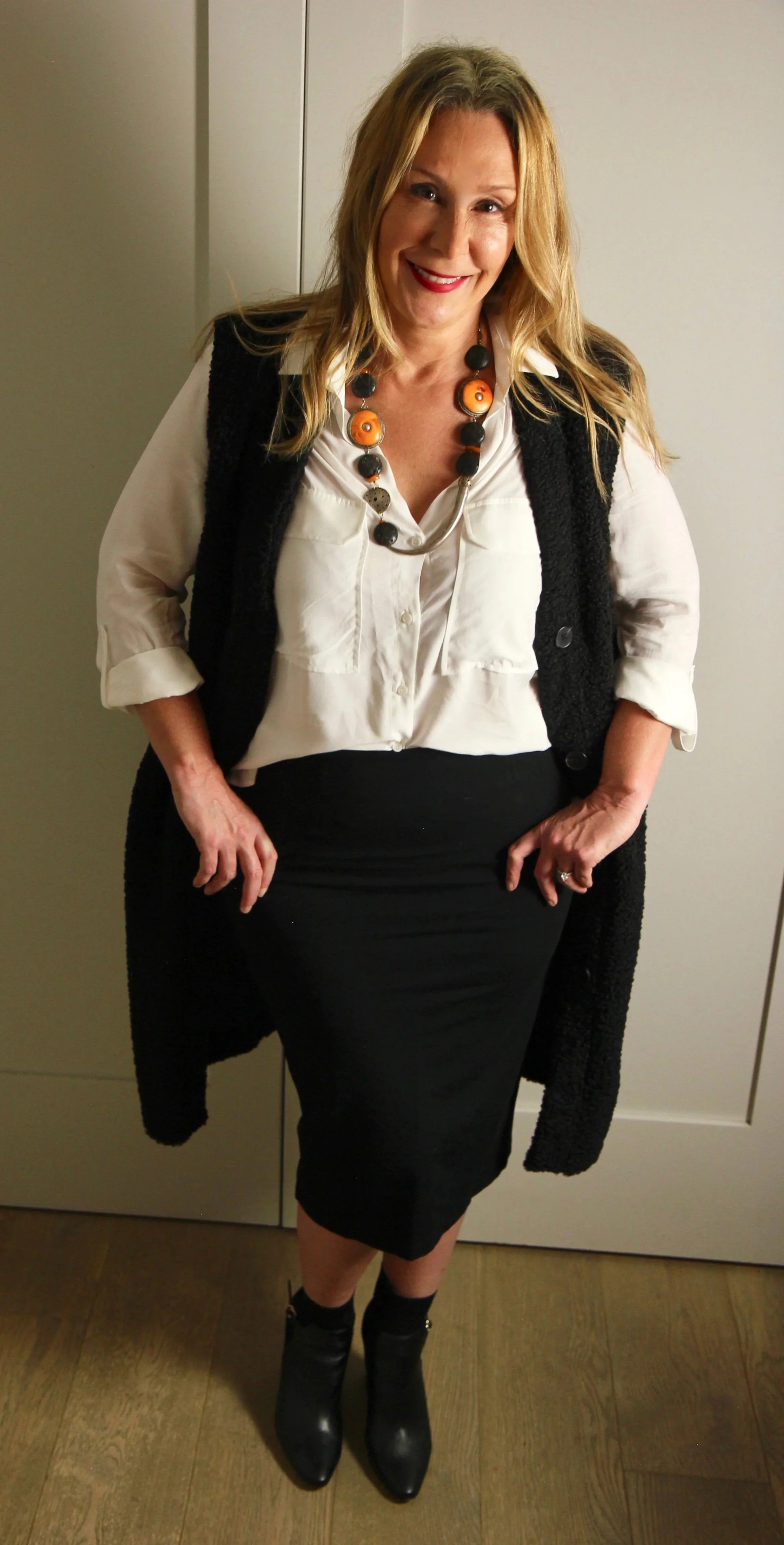
Rome is full of eternal jewels — remnants of empires past and present, compressed into objects small enough to hold in your hand. At that point in my American life I had never stood inside that kind of time before. Wandering the streets, the dealers and the great houses of Roman jewelry, I felt for the first time what I would spend the next two decades exploring in depth: that jewelry is a portal — because humans make it.
Over the next two decades I built a jewelry brand from archival research through international supply chain to retail residency in a luxury mall adjacent to Versace, Prada, and Cartier. I also created an original retail concept in another location with a jewelry-making workshop at its center. Teaching jewelry making across different demographics, generations, materials and forms confirmed the commercial insights at the heart of my research. To generate those insights I relied on ethnographic field methods — a qualitative research approach to inform the vendor relationship, fieldwork methodologies to inform product decisions, the workshop to confirm what the archive had been suggesting. I approached every point of commercial contact as a researcher. These were never different disciplines. They were the same intelligence applied at different points in the process — using the market as my field.
The Semiotics of Adornment
What happened in that shop near the Pantheon was not aesthetic preference. It was recognition — the body reaching for a form it already knew before the mind had named what it was looking at. That is the research question my work is built around.
Working across museum archives, artisan workshops, trade markets, a luxury boutique, and an original retail concept that included a jewelry-making workshop, I developed a framework for asking what objects carry and why it matters. These experiences suggested the power of perpetual archetypes to emerge and re-emerge. The disc, the spiral, the serpent, the feather, the eye are some of the forms that recur independently across cultures separated by oceans and millennia, while the human conditions that call them forward continue to evolve.
The consumer already knows. They knew before they saw it, touched it, before they asked the price, before they read the provenance card. The commercial problem is not defining heritage but creating multiple pathways to individual recognition within it. That gap is where my research lives.
It addresses the questions that precede strategy: what the body reaches for before conscious preference forms, why provenance and heritage matter at a depth documentation alone cannot communicate, why heritage should be analyzed relationally, and why adornment rituals require full intelligence briefs beyond the contemporary time and place.
My work draws on twenty years of iterative qualitative testing in real time at my own financial risk, a PhD in cultural anthropology, and an undergraduate foundation in biochemistry. And an endless fascination with jewelry, form and fashion. My white papers, case studies, and frameworks are an open invitation to designers, sourcing directors, brand strategists, and creative executives who want to understand not just what luxury consumers buy, but how they find themselves. If that question interests you, the conversation begins here.
In Practice
Every finding in this portfolio was tested somewhere real. Turkey, Mexico, Peru, Italy, Colombia — markets, workshops, dealers, craftspeople. I move through those spaces and know what to look for inside them. I also source across India, China, and Africa through deep specialist networks built over years of active research. The field and the archive are not separate practices for me; they are the same conversation.
When I bring something back — an object, a technique, a maker, a tradition, an artefact — I bring it back with context. A reading: what this thing is, where it comes from, what it has meant across time, and why it might matter now. That is what gives a trend report or mood board its tension.
Two decades of self-directed research has produced a methodology ready for institutional scale. The next work requires a global archive, a deep collection, and a team. I am ready for that conversation.
Currently seeking a senior research or sourcing role within a global luxury house as a Brand Anthropologist.
Based in Los Angeles, willing to travel, relocate